Bitsave is a savings protocol that helps income earners have goal-oriented savings with stablecoins.
How Bitsave Works
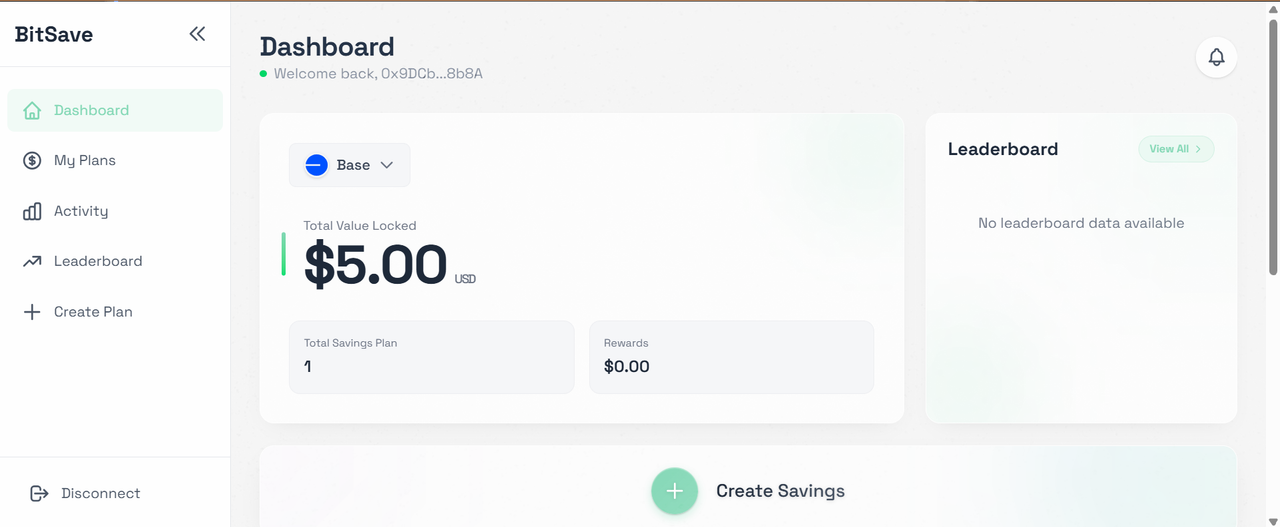
1. Creating a Savings Plan and Secure Deposits
This contract securely holds the deposited funds and is exclusively accessible via the user’s wallet.
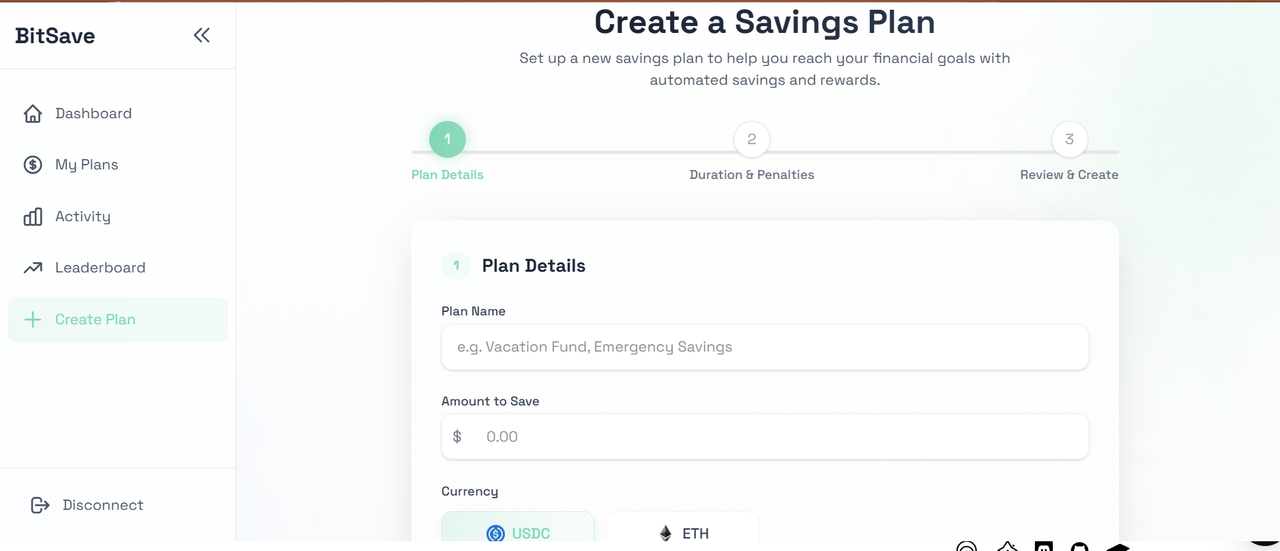
The Bitsave Parent-Child smartcontract design makes it such that each user's savings are directly tied to their wallet, so even in the event of a protocol exploit, the hacker would need to get each users wallet private keys to access the funds.
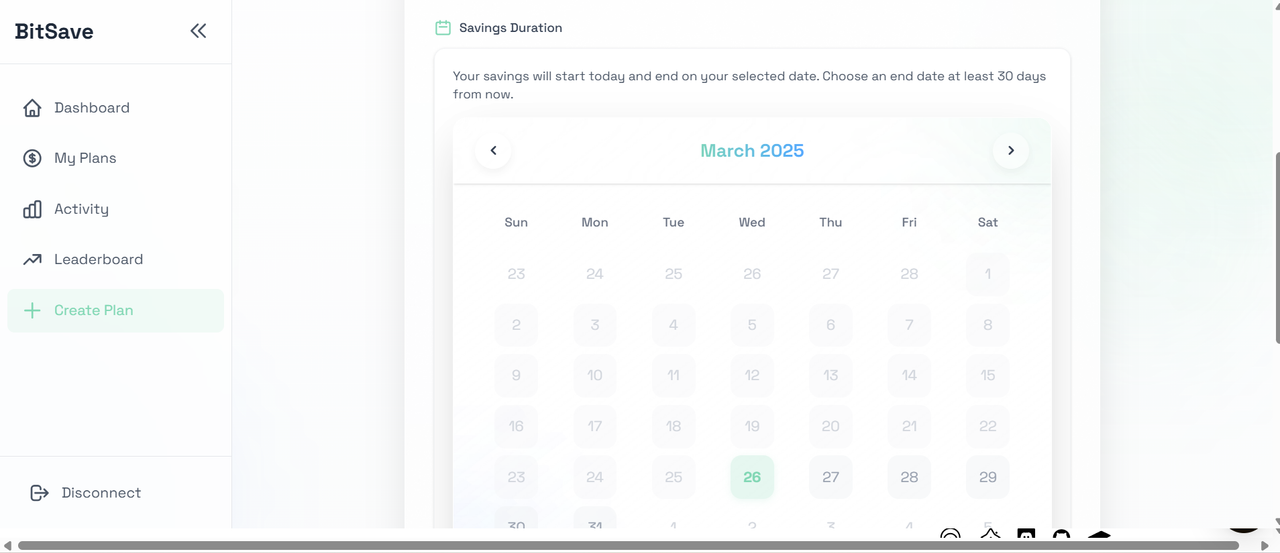
Every user’s savings deposit is tied to their wallet so that in case of an exploit, the hacker wouldn’t have access to user funds, except they have access to users' wallet private keys, this minimises the risks of users losing their funds to exploits.
2. Savings Plans and Fee Structure
3. Break Savings Penalties
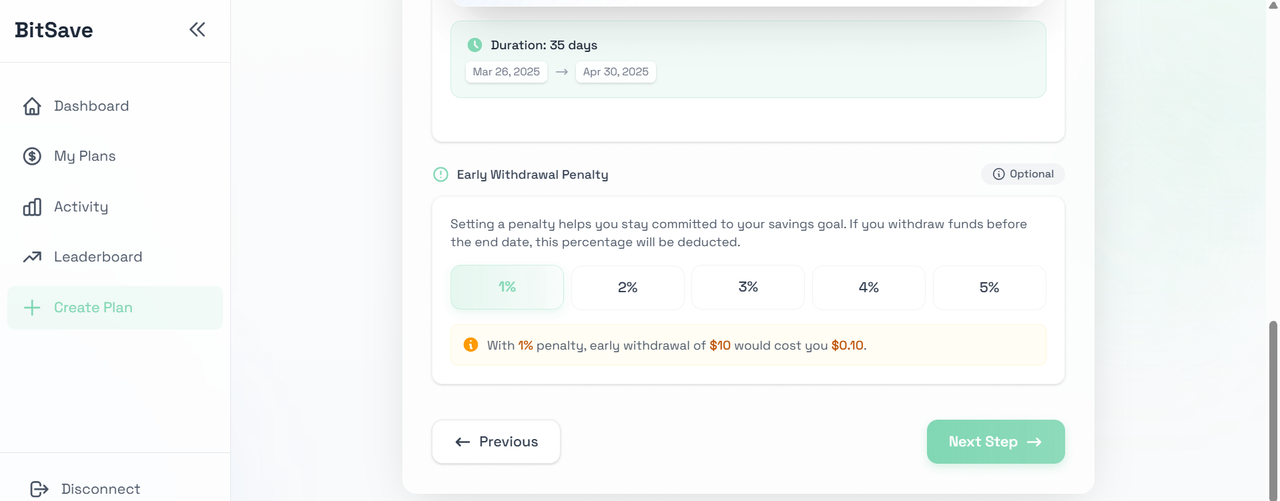
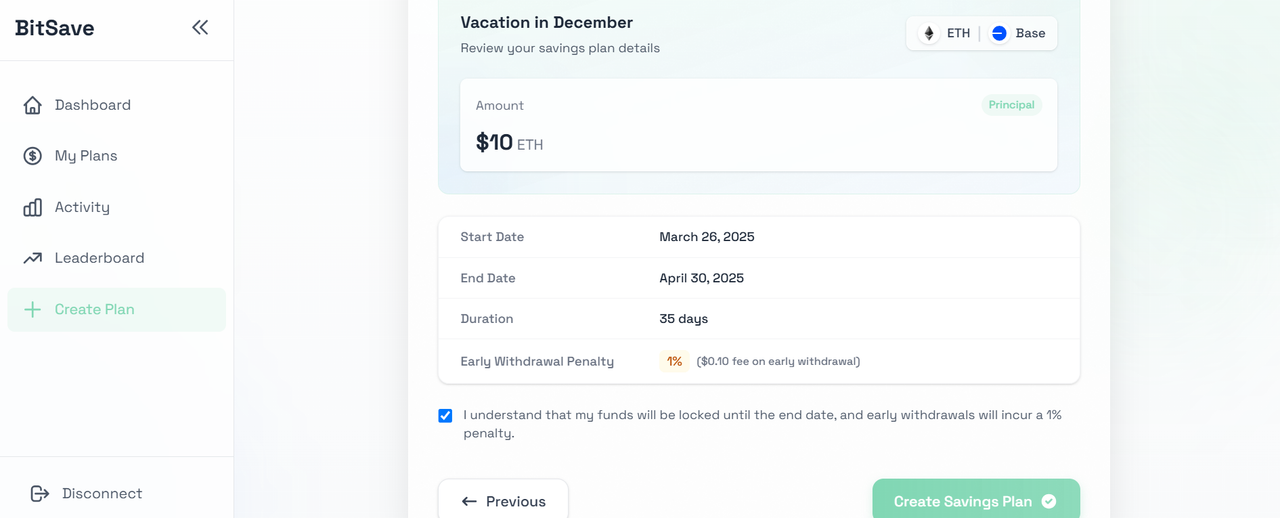
Users set the penalty fee (1%–5% of their savings) when creating the plan. Users with bad savings habit who want to discipline them selves to save and discourage themselves from breaking their savings usually set the highest fee. If they break their savings early, the penalty is deducted.
4. Multiple Savings Purpose and Naming
Users can create multiple savings plans for different purposes and manage them on Bitsave; vacation, rent, school fees, emergencies etc.
5. Top Up
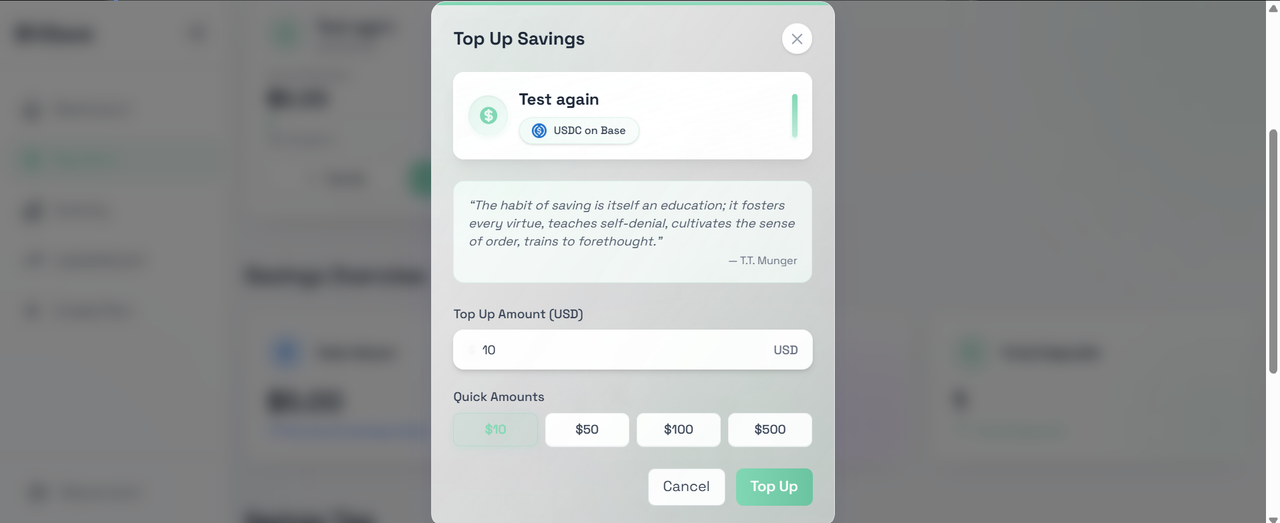
Bitsave Top-Up feature makes it easy, for users to create recurring savings for diferrent purposes; so if a user was saving for rent and they wanted to save $100 every month for 6 months, then all they need to do is create a Savings Plan for rent and top $100 every month.
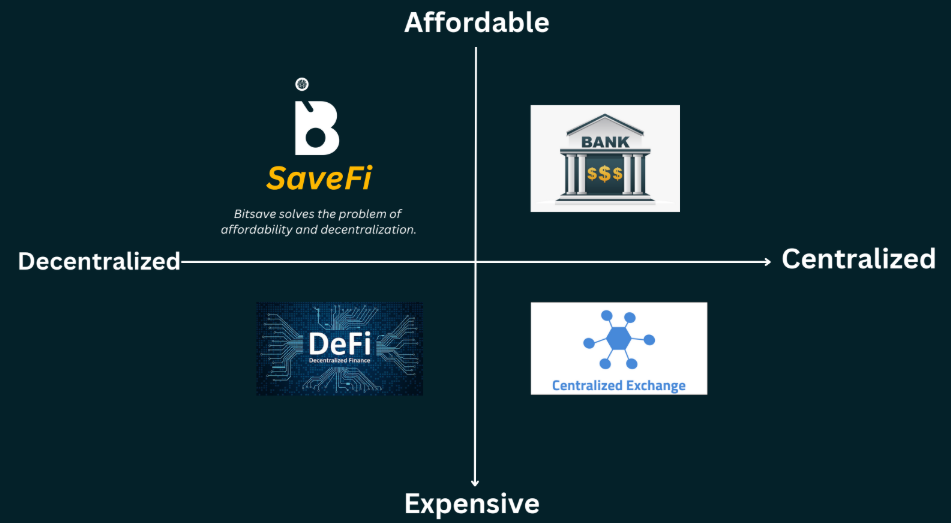
Globally, there are 4 popular players in Finance;
-Banks (Including Co-Operatives, Credit Unions, Brokerage firms etc)
-Centralized Exchanges
-DeFi
-SaveFI
SaveFi is Both Decentralized and Affordable because it focuses on savings and not investments.
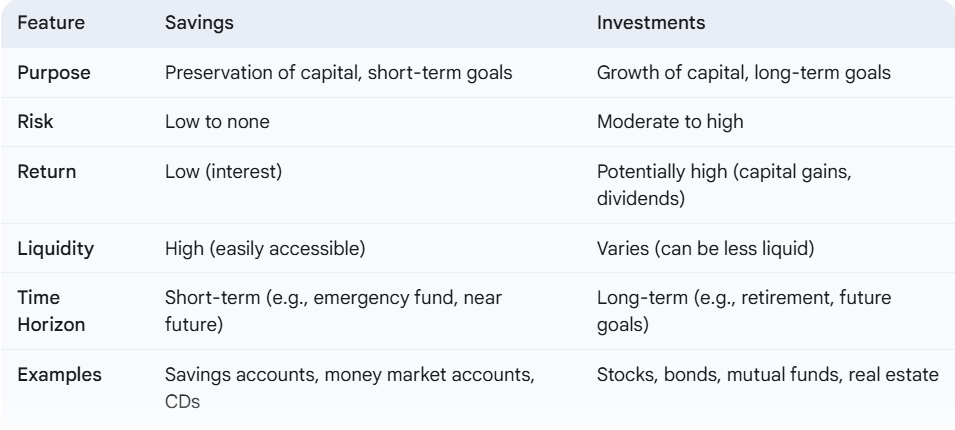
Savings and Investments aren't the same thing.
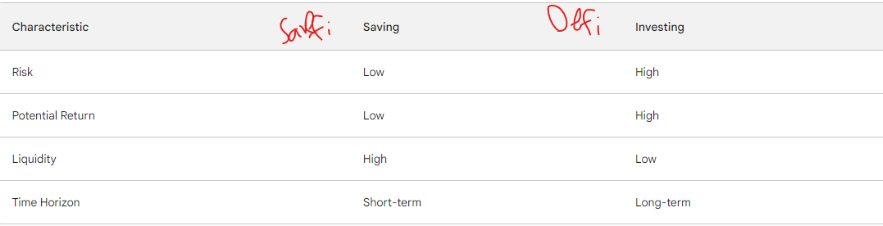
Bitsave Users are users who just want a tool that helps them keep money for the rainy days.
Bitsave users use Bitsave to save and not invest, they want to achieve their savings goals in the left side of this table👇🏽
😌It's easy - Everyone is familiar with the concept of putting money aside for a raining day. And our UX makes it understandable for users to take the savings journey onchain.
🧮It helps Personal Finance and Accountability for Web3 Natives who earn consistent income. Users can track their savings and manage withdrawals and expenses using Bitsave.
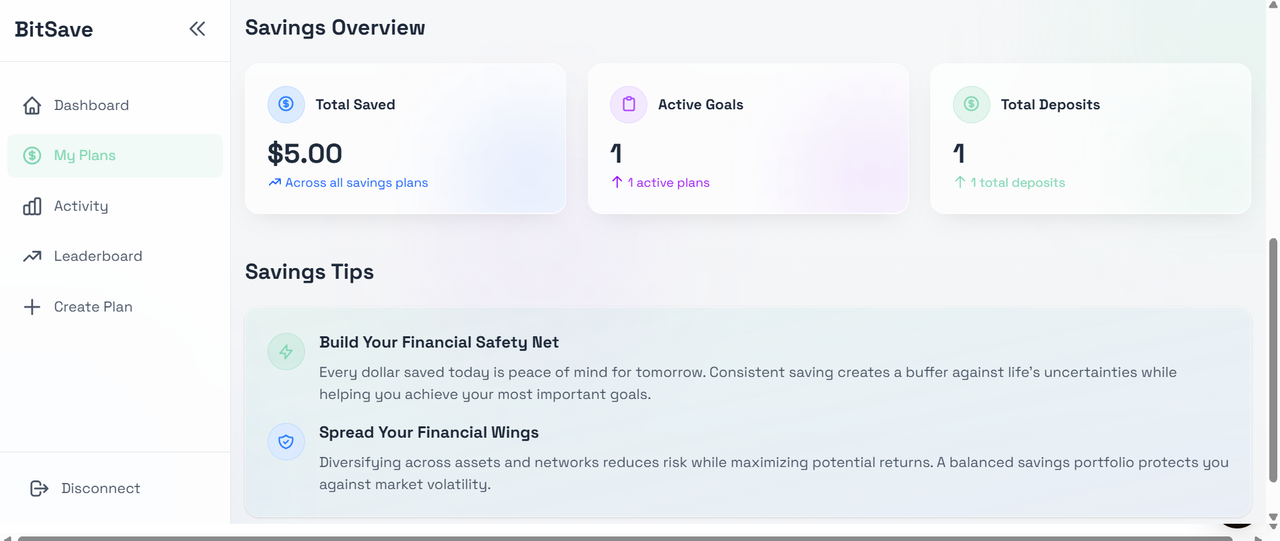
🧐Bitsave focus is on Savings, not investment, there are already superflous DeFi protocols that caters to investment purposes, Bitsave's Focus is on Savings only.
The Child-Parent Contract Function in Bitsave is a contract structure feature that ensures users' funds remain safe;
Savings Plan Creation:
When a user sets up a savings plan on Bitsave, they are NOT depositing funds into a shared liquidity pool.
Instead, a child smart contract is automatically generated based on their selected savings parameters of time, amount, name etc
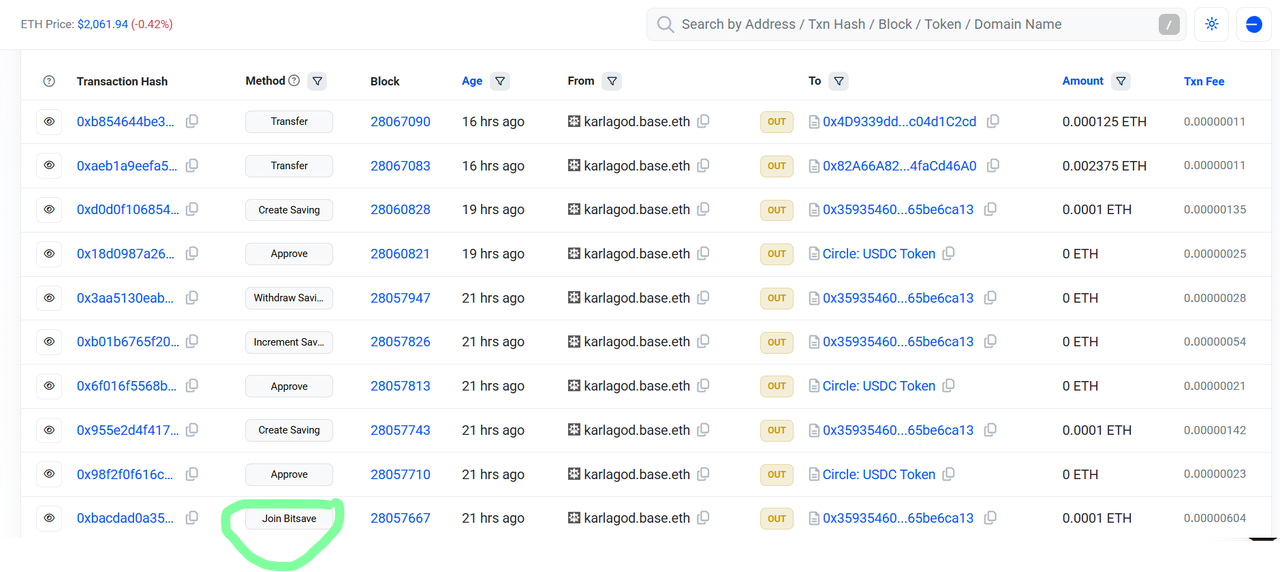
That contract is created when a user "Joins Bitsave", you can see it here👇🏽
Transaction hash
https://basescan.org/address/0x3593546078eecd0ffd1c19317f53ee565be6ca13
Child Contracts & Security:
Each child contract is directly linked to the user's wallet and funds are stored in this contract, making it isolated from other users' funds and preventing large-scale exploits.
Since the funds remain within individual contracts, any attempt to move them requires wallet approval from the user.
Protection Against Exploits:
If a hacker tries to breach Bitsave’s system, they won’t find a single pool of funds to drain.
Instead, they would have to individually compromise each user’s wallet by getting their approval for transactions.
For instance, if Bitsave has 50,000 users, an attacker would need to obtain 50,000 separate transaction approvals, making the exploit practically impossible.
Compounding & User Benefits:
Since the funds are stored in individual contracts, recurring savings and top ups make it easier for users to just manage their savings.
Bitsave's introduction of SaveFi
Decentralized Protection: Users retain ownership of their funds, reducing the risk of centralized failures or large-scale hacks.
No Third-Party Custody: Bitsave never holds user funds, aligning with non-custodial DeFi principles.
Enhanced Security Model: Even in a worst-case scenario, a hacker would need the user’s direct on-chain approval to steal funds, making mass exploitation nearly impossible.
The Future of Savings in Web3 is Savefi
To make it easy for anyone earning in crypto to save for the future, protect their money from inflation, and reach life goals like rent, school, or travel all from their wallet.
We're building the rails for decentralized savings in web3 helping users save, stay disciplined, and grow responsibly without losing control of their money.
To help crypto income earners and everyday savers achieve financial stability by making onchain, goal-based savings simple, secure, and accessible without the risks of volatility, inflation, or DeFi complexity.
Most onchain users earn in crypto but end up spending or losing funds in high-risk DeFi protocols because there’s no simple, goal-oriented savings protocol.
In many countries, fiat savings rapidly lose value due to inflation and currency devaluation, and access to USD savings is limited by banking barriers.
Traditional DeFi savings require users to deposit into shared pools vulnerable to exploits and rug pulls.
A SaveFi protocol that lets users lock stablecoins for specific life goals (e.g., rent, school fees, travel) with a clean UI and custom penalties to discourage early withdrawal.
Enables non-custodial stablecoin savings (such as USDC, cUSD, G$) for anyone globally, allowing users to preserve their purchasing power without needing a bank account.
Utilizes a Parent-Child Smart Contract system, where each user’s funds are isolated in their own contract, accessible only by their wallet significantly reducing exploit risk.
Africa