Description
AYOWECCA UGANDA is a community led NGO in Tororo, East Uganda. At AYOWECCA UGANDA, we train rural farmers on regenerative agricultural methods/smart agriculture that are environmentally sustainable, map agricultural practices in carbon credits, promote agroforestry and permaculture where farmers can plant fruit trees besides growing food or cash crops and learn how to make organic manure and pesticides.
We also have a charity which works in our local communities to mobilize climate change awareness and education, crypto education, tree planting and wetlands and peatland restoration campaigns, workshops, storytelling, giving seeds to farmers, etc.
For GG20, we request that with your support, we can create a thriving community training/skilling center and demonstration farm to help our community adapt to the escalating impacts of climate change. We seek to build climate resilience for rural, low-income communities with a focus on women, families and youth. Your support will also help us plant more fruit trees in schools, health centers and churches. Our training space is small and we would like to get a bigger place in order to help more people, and also to be able to pay additional facilitators. Our vision is that by next year, many of our Climate Round supporters can visit our farm and recommend interns for our organization.
At Ayowecca Uganda, we believe the time to act is now to safeguard not only the natural heritage of Tororo, Eastern Uganda, but also the health, prosperity, and resilience of its communities in the frontlines affected by the climate crisis. We invite you to join us in making a difference to the lives of those who really need it.

About
In the heart of Tororo, Eastern Uganda, a crisis of environmental degradation threatens the region's biodiversity and agricultural productivity. Rampant deforestation and wetland destruction have led to irreversible damage, impacting the livelihoods of local
communities. Our proposed solution aims to restore the natural landscapes through community awareness campaigns and large-scale tree planting efforts. By addressing the lack of awareness and engaging communities in restoration efforts, we can
create a sustainable shift towards conservation practices.
Our project's goals include planting 1 million native trees, rehabilitating 100 hectares of wetlands, and increasing environmental conservation awareness among 80% of the local population. We are committed to reversing the tide of environmental degradation in Tororo and fostering a culture of conservation for generations to come.
AYOWECCA UGANDA’s wide range of programs provide support in some of the poorest and most underprivileged communities in Uganda, East Africa. We work with wetlands, peatlands and ecosystem restoration to help address climate change; we also plant fruit trees in schools, health centers and communities to fight food insecurity, increase plantations and provide forest cover.
Besides agroforestry/permaculture, plastic wastes and management and energy conservation, AYOWECCA UGANDA also trains young adolescent girls on how to make reusable sanitary towels and provides scholastic materials to the most vulnerable to attend and access education and creates awareness among communities to actively empower women and children.
Since AYOWECCA UGANDA is community founded, our activities are community based to benefit the local people facing both social and environmental challenges.
Update
1357 rural farmers have been trained on regenerative/smart agricultural methods.
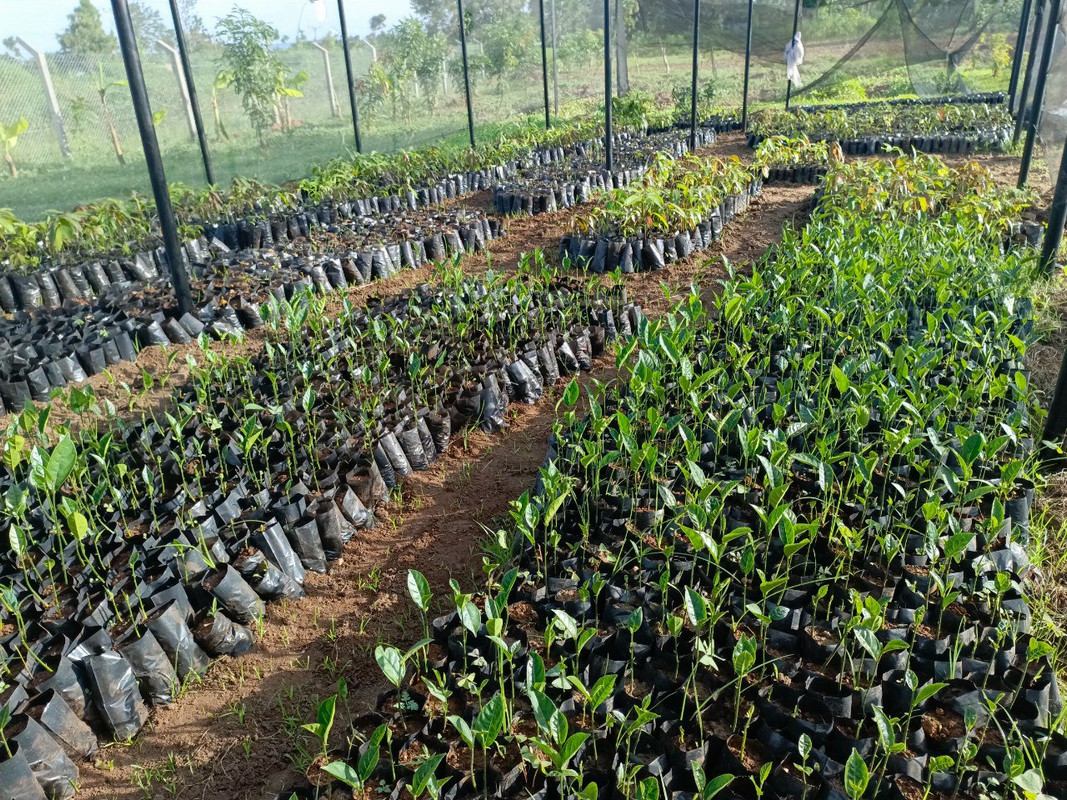
38,000+ fruit trees have been planted in 121 schools and 73 health centers
8 wetlands have been restored
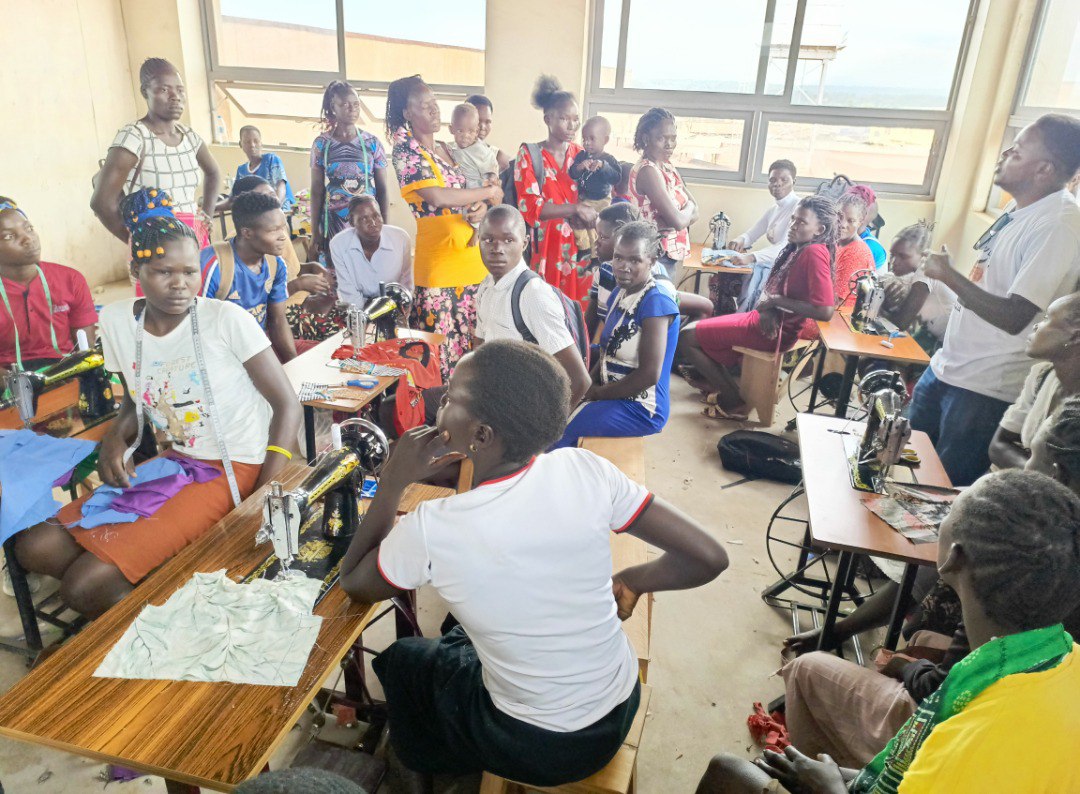
683 women and girls are undertaking the skills training on both tailoring and hairdressing
3,350+ children receive scholastic materials every year
1155 girls and women have been trained on making reusable sanitary towels
We also bought tailoring, catering and salon services to train rural girls and women who have dropped out of school and to empower them with hands-on skills to be economically empowered.
Project Objectives
Objective 1
Sensitize stakeholders on the importance of Agroforestry/permaculture/regenerative agriculture.
Form groups among communities and train them in agroforestry practices.
Enhance the capacity of 1,000 households in 50 groups to raise and plant seedlings on their individual/community farms.
Establish nursery beds for raising seedlings to supply schools, health centers and across Tororo District.
Train rural farmers on regenerative agricultural practices including making organic manure and pesticides.
Objective 2
Procure training materials for agroforestry/permaculture demonstrations.
Establish agroforestry seedlings/permaculture sites per Sub County.
Objective 3
Distribute seedlings to their individual members/community members.
Supervise and monitor planting by their members.
Intercrop established plots with Agricultural crops.
Objective 4
Distribute seedlings to schools, health centers, churches and to the communities.
Supervise and monitor planting of trees in schools, health centers and churches.
We welcome anyone or any organizations willing to work with us to make this world a better place for everyone as partners and collaborators.
Partnerships
We are so grateful for our continued collaboration and partnership with The Solar Foundation in the past years, financing our office with solar power, security fencing and solar lights at our greenhouse/nursery bed and powering 125 families with solar lanterns (women and vulnerable families).
We are also collaborating with Silvi Protocol to track the growth of fruit trees we have planted from potting at the nursery bed, to planting through maturity when they bear fruits through dMRV data.

Conclusion
The environmental crisis in Eastern Uganda presents a pressing need for action to reverse the tide of degradation and safeguard the region's natural heritage. Our proposed solution, centered on community awareness campaigns and large-
scale tree planting efforts, addresses the root causes of environmental degradation while fostering a culture of conservation.
The significance of this project extends beyond local impact, as it contributes to global concerns such as climate change and biodiversity loss. Absolute poverty and water scarcity, education and technology literacy
The impact of our project will be transformative, leading to improved biodiversity, enhanced community resilience against climate change impacts, and a shift towards sustainable land use practices. By implementing a comprehensive framework for
evaluation and planning for future funding through eco-tourism initiatives and international partnerships, we are dedicated to ensuring the long-term sustainability of our conservation efforts in Tororo Eastern Uganda and economic empowerment for women and rural farmers.
Mission
Our organization, deeply rooted in community engagement and sustainable agriculture, stands at the forefront of addressing the multifaceted crisis gripping rural communities. With a mission to empower rural women through education on sustainable agriculture techniques and digital financial literacy, we aim to combat poverty, environmental degradation, and food insecurity head-on.
By bridging the gap in crypto literacy, providing training in sustainable farming practices, and establishing women saving groups, our project offers a beacon of hope for those marginalized in the digital age. Through proactive planning and empowerment initiatives, we not only seek to uplift individuals but also lay the groundwork for resilient and equitable rural communities.
In the heart of Eastern Uganda, a crisis of environmental degradation threatens the region's biodiversity and agricultural productivity. Rampant deforestation and wetland destruction have led to irreversible damage, impacting the livelihoods of local communities. Our proposed solution aims to restore the natural landscapes through community awareness campaigns and large-scale tree planting efforts. By addressing the lack of awareness and engaging communities in restoration efforts, we can create a sustainable shift towards conservation practices.
The project's goals include planting 1 million native trees, rehabilitating 100 hectares of wetlands, and increasing
environmental conservation awareness among 80% of the local population.
Problem
In the heart of Eastern Uganda, a silent crisis unfolds, one that threatens not only the natural beauty and biodiversity of the region but also the very livelihoods of its inhabitants. This crisis is environmental degradation, a relentless force eroding the foundations of ecological balance and agricultural productivity. The once lush forests and vibrant wetlands that dotted the landscape are now facing an existential threat, with deforestation and wetland destruction at the forefront of this environmental calamity.
The statistics paint a grim picture: vast expanses of forest land have been cleared, with estimates suggesting that Uganda loses approximately 200,000 hectares of forest each year. This rampant deforestation is not just a loss of trees but a devastating blow to biodiversity, leading to irreversible damage to habitats and the species that depend on them. Moreover, the destruction of wetlands exacerbates this issue further, disrupting water cycles and reducing the natural filtration systems that these ecosystems provide.
The consequences extend beyond environmental loss; they strike at the heart of agricultural communities. In Eastern Uganda, where agriculture forms the backbone of local economies, environmental degradation has led to reduced soil fertility and water availability. This decline in agricultural productivity threatens food security and livelihoods for thousands, pushing communities further into poverty.
At the core of this crisis is a lack of awareness among local communities about the importance of environmental conservation. Many are unaware of the long-term consequences their actions may have on their environment and ultimately on their own well-being. Without this critical knowledge, unsustainable practices continue unabated, furtherfueling the cycle of degradation.
The population served by our project is the very fabric of Eastern Uganda—farmers, families, and future generations whose lives are intricately woven with the land they live on. These communities stand to lose the most from environmental degradation, yet they also hold the key to its reversal. By addressing this lack of awareness and fostering a culture of conservation, we can begin to heal the wounds inflicted upon the land and its people.
The importance of tackling this issue cannot be overstated. The environmental crisis in Eastern Uganda is not only a local problem but a global concern, as it contributes to climate change and biodiversity loss on an international scale. The time to act is now, to safeguard not only the natural heritage of Eastern Uganda but also the health, prosperity, and resilience of its communities for generations to come
Solution
Our solution is to restore the wetlands and forests in eastern Uganda through a multi-faceted approach. We will enhance community awareness through targeted media campaigns, educating locals about the importance of environmental
conservation and sustainable practices. Additionally, we will initiate large-scale tree planting efforts to replenish the lost forest cover and restore vital ecosystems.
This solution will be effective because it addresses the root cause of the problem by tackling both the lack of awareness and the physical degradation of natural habitats. By empowering communities with knowledge and engaging them in hands-on restoration efforts, we can create a sustainable shift towards conservation practices. This approach not only benefits the local environment but also fosters a sense of ownership and responsibility among the communities, ensuring long-term success in preserving Eastern Uganda's natural heritage
Business Model
AYOWECCA UGANDA’s** wide range of programs provide support in some of the poorest and most underprivileged communities in Uganda, East Africa. Since AYOWECCA UGANDA is community founded, our activities are community based to benefit the local people facing both social and environmental challenges. In addition to our agroforestry work, we are opening a skills training center for women and girls, and also young people, that will include Web3 onboarding and computer literacy as well as training for tailoring, catering and salon services. The categories of women who need vocational skills interventions are those who are school dropouts,women, widows and those who face extreme poverty, especially related to HIV/AIDS, Conflicts/wars, Politics, among others. Women and girls are in dire need of basic needs and supplementary benefits as Ugandans. These service points can hence be used to create opportunities to the target group who are in communities.The vocational skills and empowerment project is not clearly established to women, school dropouts, widows and orphans due to communities referring them as unfit, and rejects when it comes to inclusion in such projects.
Path to Success
Want to grow through just grant funding
Location of Impact
Africa
Total Funds Raised
18500